
Areas of Study
A Montessori elementary curriculum designed to connect knowledge, inspire curiosity, and help children understand their place in the world.
Education is not a collection of subjects, but a connected understanding of life.
At Happy Flower Montessori Elementary School, our curriculum is guided by the Montessori concept of Cosmic Education. This approach helps children see how language, mathematics, science, history, and culture are deeply interconnected. Learning is purposeful, hands-on, and rooted in real experiences that allow students to explore ideas with meaning, responsibility, and curiosity.


How Learning Happens
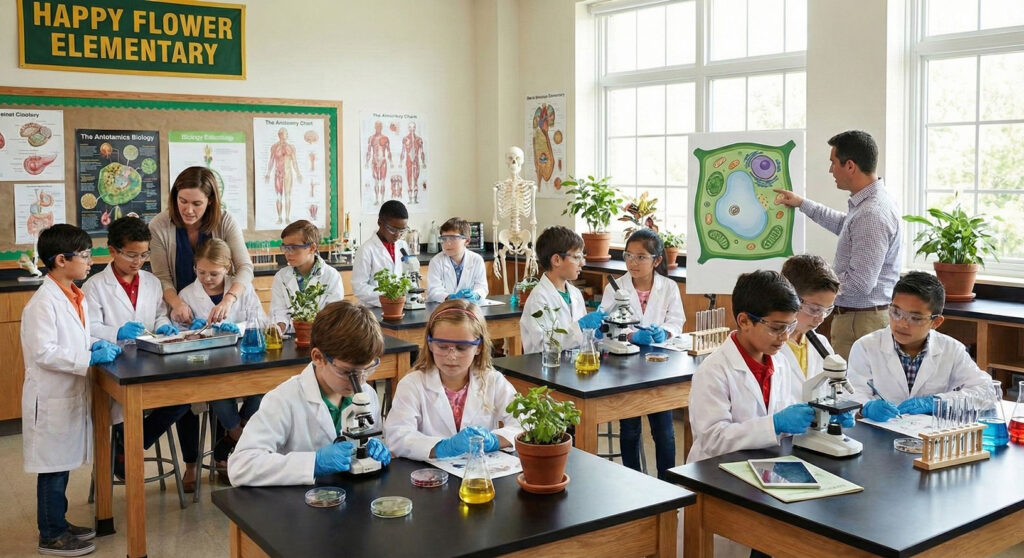
Children engage with carefully prepared materials, collaborative work, and guided exploration. Each area of study supports independence, concentration, and critical thinking while encouraging students to make connections across disciplines.
A Thoughtful, Evidence-Based Approach
Our Montessori guides observe each child closely and introduce lessons when the student is ready. This individualized approach allows children to develop confidence, accuracy, and a deep understanding of concepts rather than relying on memorization.
Cosmic Education
in Practice
Our curriculum is built around the Montessori idea that all knowledge is connected. Students learn to see relationships between science, geography, history, language, and mathematics, and how each area helps explain the world.
By exploring the story of the universe, life on Earth, and human civilization, children develop curiosity, gratitude, and a sense of responsibility. Learning becomes meaningful because it connects to real life, not just schoolwork.
Areas of Study
At HF Montessori Elementary School, our curriculum is guided by the Montessori concept of Cosmic Education, which helps children understand the interconnectedness of all knowledge and life. Each area of study is carefully designed to support intellectual growth, independence, curiosity, and a deep sense of responsibility toward the world. Learning is hands-on, meaningful, and rooted in real experiences that connect academic concepts to everyday life.
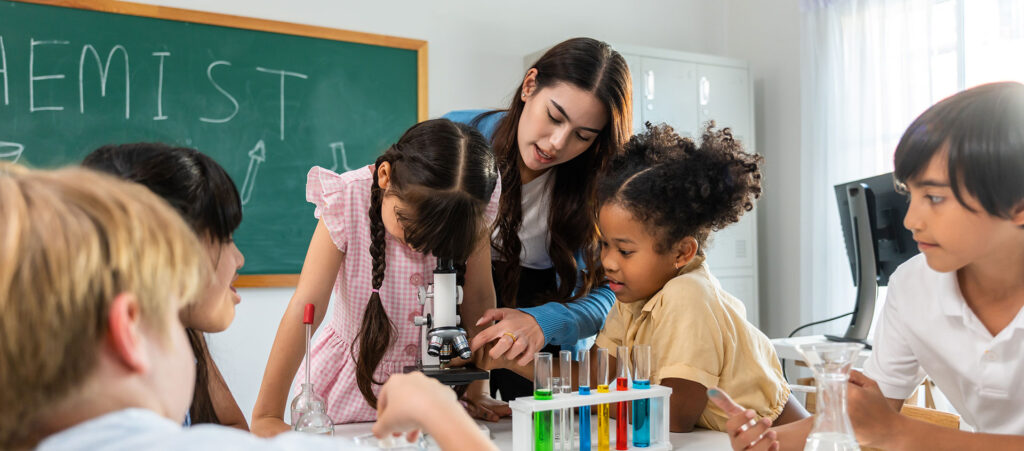
Biology at HF Montessori Elementary School invites students to explore the living world through observation, classification, and inquiry. Children study plant and animal life, ecosystems, life cycles, and the human body, gaining an understanding of how living organisms grow, adapt, and depend on one another. Lessons emphasize respect for nature and encourage students to recognize their role in protecting the environment. Through hands-on materials, experiments, and outdoor exploration, students develop scientific thinking, curiosity, and an appreciation for the diversity of life on Earth.
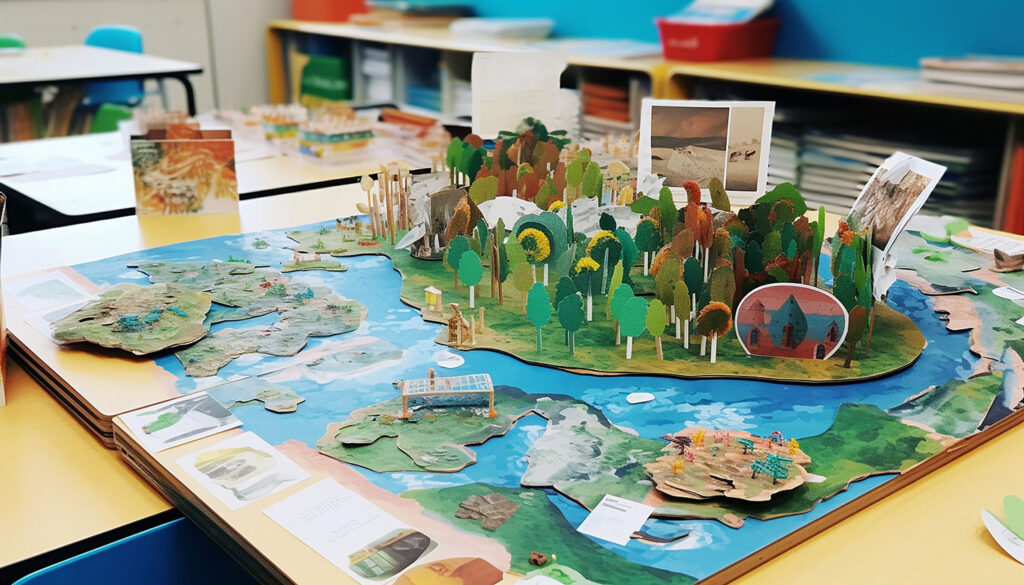
Geography and physical science help students understand the structure and forces of the natural world. Children explore landforms, oceans, climate, weather, and natural resources while learning about matter, energy, motion, and basic physical laws. Map work, experiments, and research projects encourage critical thinking and global awareness. Students learn how natural systems function and how human activity impacts the planet, fostering environmental responsibility and a broader understanding of the world they live in.
At HF Montessori Elementary School, learning is not limited to the classroom. Our “Going Out” experiences allow students to apply academic knowledge in real-world environments. Through field trips, community visits, interviews, and group projects, children develop independence, planning skills, teamwork, and confidence. These experiences help students connect theory to practice, strengthen social skills, and build a sense of responsibility and engagement within their community.
History and social studies provide students with a deeper understanding of humanity’s past and present. Children explore timelines, ancient civilizations, cultural traditions, social systems, and historical events to see how societies develop and change over time. Lessons promote empathy, cultural awareness, and critical thinking by encouraging students to consider different perspectives. Through storytelling, research, and discussion, students learn the importance of cooperation, justice, and active citizenship in shaping the future.
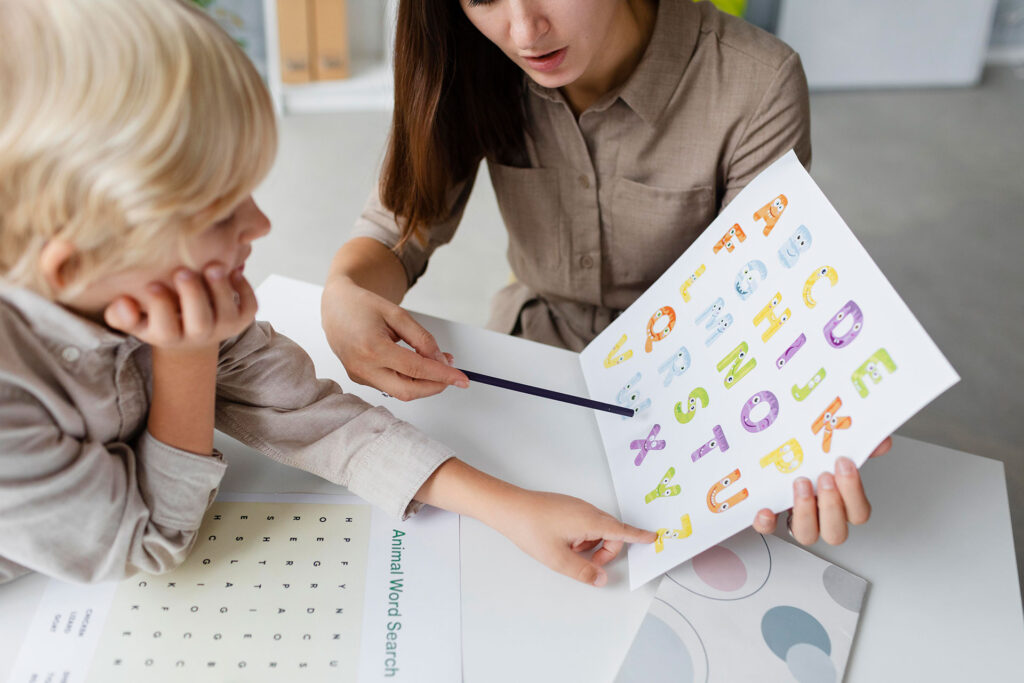
Language and mathematics are essential tools for communication, reasoning, and problem-solving. At HF Montessori Elementary School, students build strong reading, writing, speaking, and comprehension skills while developing mathematical understanding through hands-on materials. Children explore grammar, vocabulary, storytelling, arithmetic, geometry, and logical reasoning at their own pace. This individualized approach builds confidence, accuracy, and a deep understanding of concepts rather than rote memorization.
This area introduces students to the grand narrative of the universe and humanity’s place within it. Through storytelling and exploration, children learn about the formation of the universe, the Earth, life, and human civilization. These lessons inspire curiosity, wonder, and a sense of connection to the world. By understanding the laws of nature and the contributions of different cultures and civilizations, students develop respect for both science and humanity.
The broader goals of Cosmic Education at HF Montessori Elementary School extend beyond academics. This approach helps students develop gratitude, responsibility, ethical awareness, and a sense of purpose. Children learn that every individual has a role to play in the balance of the world. Through reflection, collaboration, and meaningful work, students grow into compassionate, confident individuals who are prepared to contribute positively to their communities and the world at large.
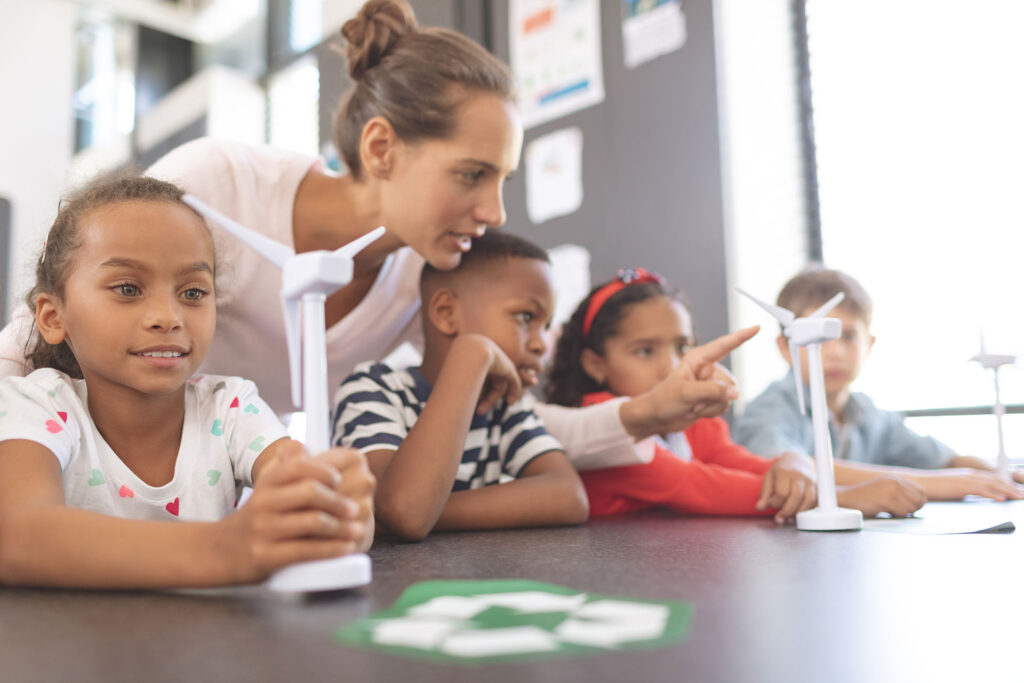
Trusted by Families, Guided by Montessori Principles
At Happy Flower Montessori Elementary School, our Areas of Study are designed to support the intellectual, emotional, and ethical development of the whole child. Through Cosmic Education, students are introduced to the story of the universe, life on Earth, and human civilization, helping them understand how knowledge is connected and why learning matters.
Children explore language and mathematics as tools for communication and reasoning, while science, geography, and history help them understand natural laws, cultural development, and humanity’s shared responsibility for the planet. Learning extends beyond the classroom through observation, discussion, research, and real-world experiences that encourage independence and accountability.
This integrated approach nurtures curiosity, empathy, and a sense of purpose. Students learn not only academic content, but also how to think critically, collaborate respectfully, and contribute positively to their communities. Our commitment is rooted in respect for the child, proven Montessori methods, and continuous growth guided by experience and reflection.
Take the Next Step
in Your Child’s Education
We welcome you to visit our school, explore our classrooms, and see Montessori learning in action.