
Why Montessori Elementary Programs Are Gaining Global Recognition
Montessori elementary education is supported by modern research showing its impact on academic success, independence, and cognitive development. Many parents are choosing Montessori programs because they align with how children naturally learn through exploration, focus, and hands-on experience. This approach helps students build strong foundations for both academic achievement and lifelong learning.
At Happy Flower Montessori Elementary School, our curriculum reflects these principles, combining scientific insight with a child-centered educational philosophy.
Research Shows Strong Academic Outcomes
Several recent studies examining Montessori programs have found impressive results. Children who attend Montessori schools often demonstrate stronger reading skills, improved memory, and higher levels of executive function compared with peers in traditional educational settings.
Executive function refers to cognitive abilities such as planning, problem-solving, focus, and self-control. These skills play a crucial role in long-term academic success and personal development.
Montessori students also frequently show stronger social understanding and collaboration, which are equally important for success in school and life.
Learning Through Exploration
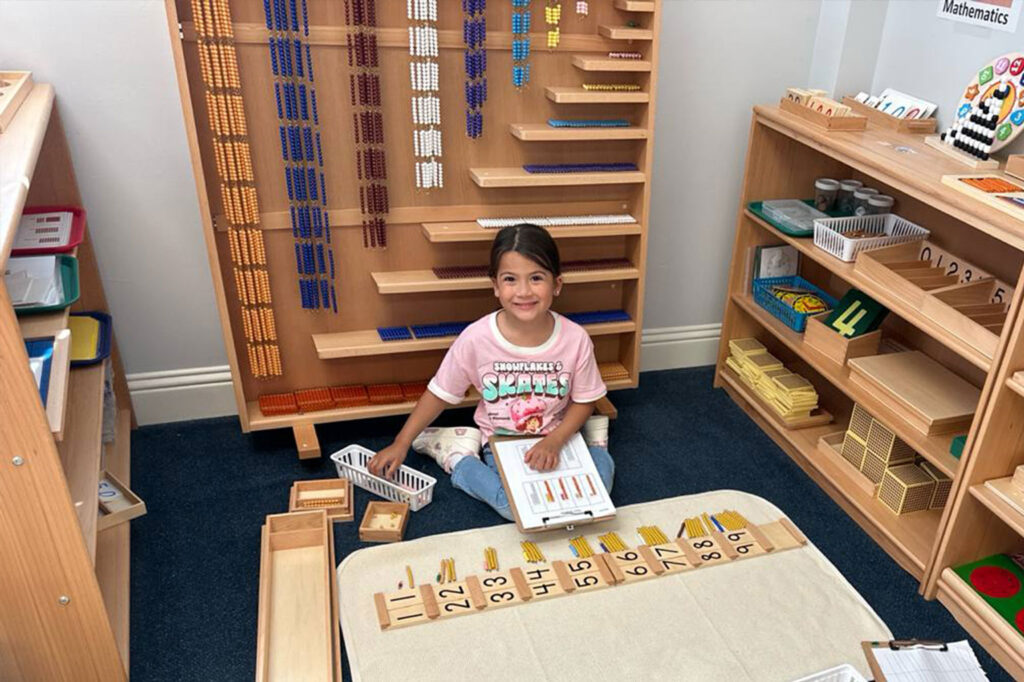
One of the defining features of Montessori education is its emphasis on hands-on learning. Instead of passively receiving information, students actively engage with materials that allow them to explore mathematical patterns, scientific concepts, language structures, and cultural knowledge.
This approach encourages children to:
- Investigate questions independently
- Practice sustained concentration
- Develop intrinsic motivation
In Montessori classrooms, teachers act as guides who support exploration rather than directing every activity. This structure allows students to take ownership of their learning.
The Role of Autonomy
Research also shows that student autonomy plays a key role in motivation and academic engagement. Montessori classrooms allow children to choose meaningful activities within a carefully prepared environment, helping them develop responsibility for their own learning.
Studies indicate that this freedom, combined with structured guidance, leads to improved academic achievement and stronger social development.
When children feel trusted and capable, they become more confident learners.
Long-Term Benefits
Interestingly, the benefits of Montessori education may extend beyond early childhood. Longitudinal research suggests that students who attend Montessori programs often demonstrate stronger problem-solving skills and independent thinking later in their academic careers.
These outcomes highlight the importance of educational approaches that nurture curiosity and intellectual independence.
A Philosophy That Honors the Child
At HF Montessori Elementary School, we believe that education should respect the natural development of every child. Montessori education recognizes that children are not empty vessels waiting to be filled with information. Instead, they are active participants in their own growth.
By supporting independence, curiosity, and meaningful exploration, Montessori classrooms create an environment where children thrive academically and personally.

